How It Works
Language becomes meaningful when children can live it.
Kinetic Lingo creates experiences where children move, explore, interact, imagine, and communicate in the language they are learning.
Rather than beginning with vocabulary lists or isolated drills, we create meaningful situations in which language has something to do: it helps a child find something, choose something, respond to a friend, enter a story, solve a challenge, or shape what happens next.
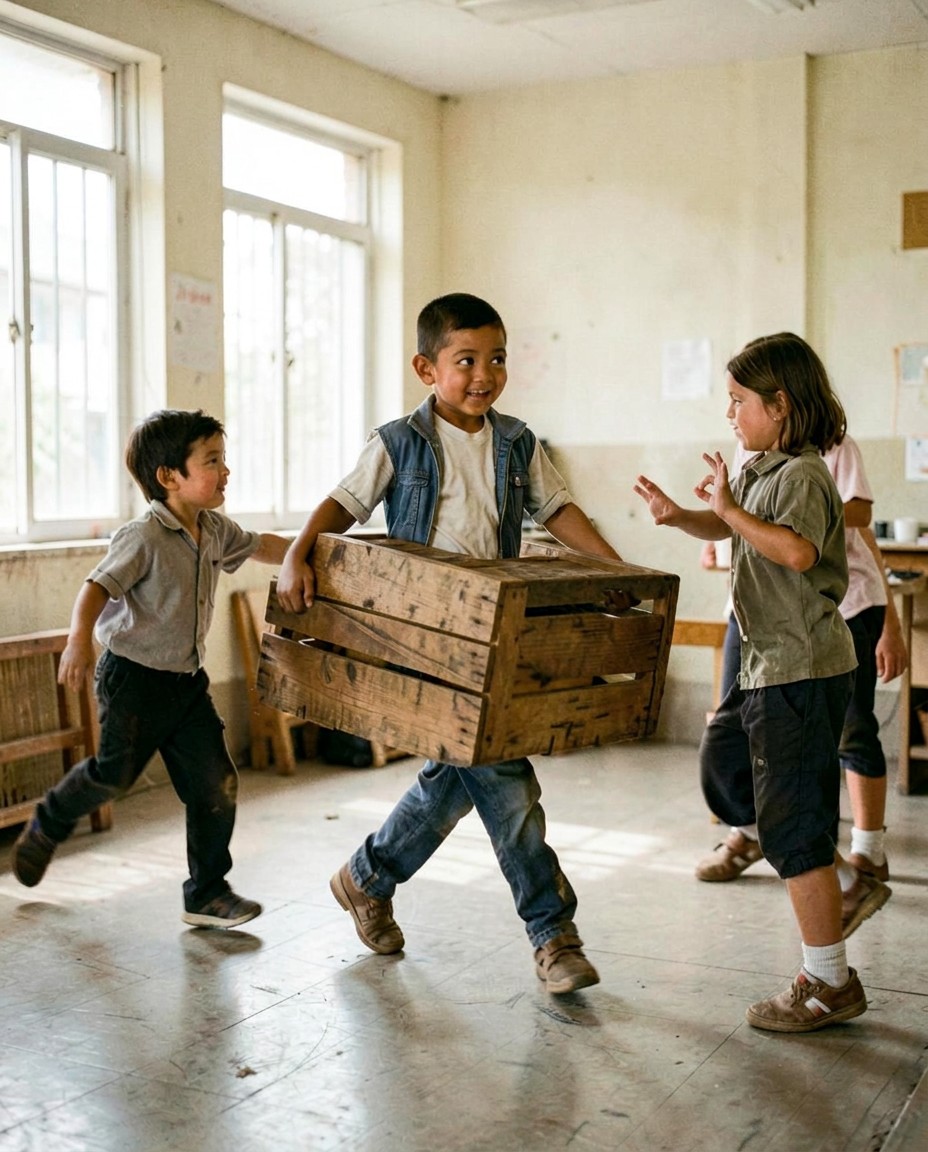
Children learn language by living it
From words to experiences.
Imagine children entering a market.
They move between different foods and objects. They hear the instructor using the target language. They choose what they want, ask for something, respond with a gesture or a word, exchange an object, notice something unfamiliar, and interact with one another.
The language isn’t separated from the experience.
It is part of what makes the experience happen.
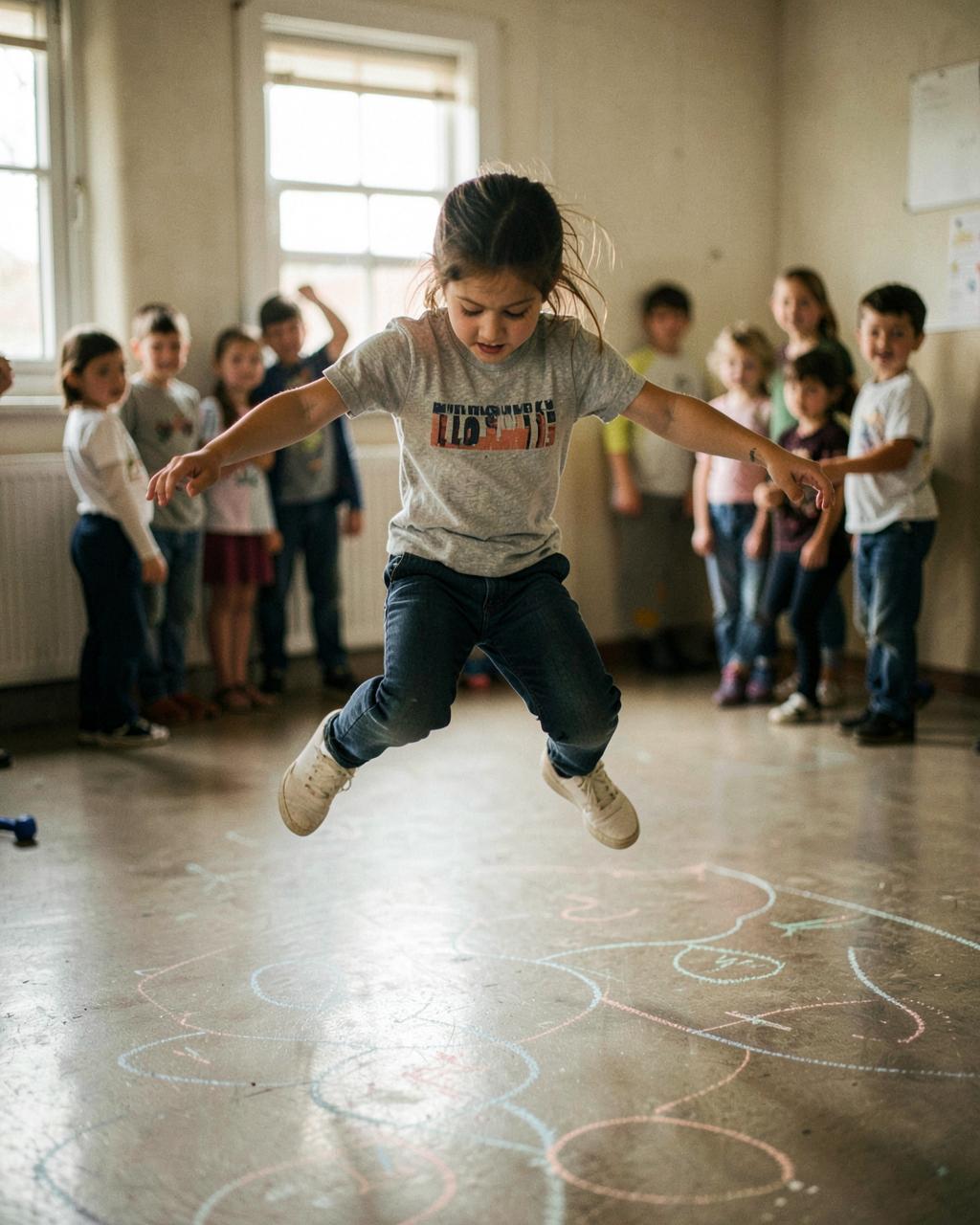
The body helps make meaning tangible.
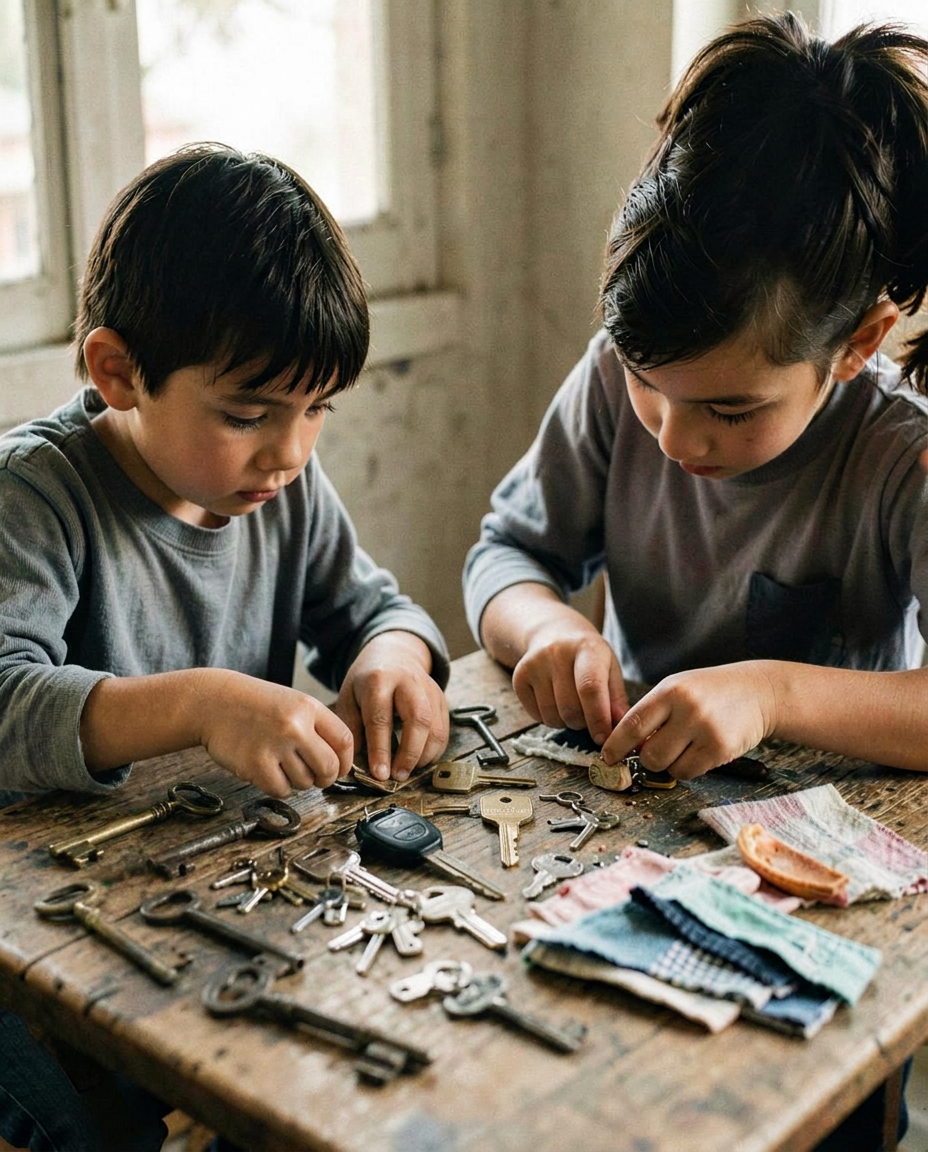
Objects, stories and cultural context build a world around the language.
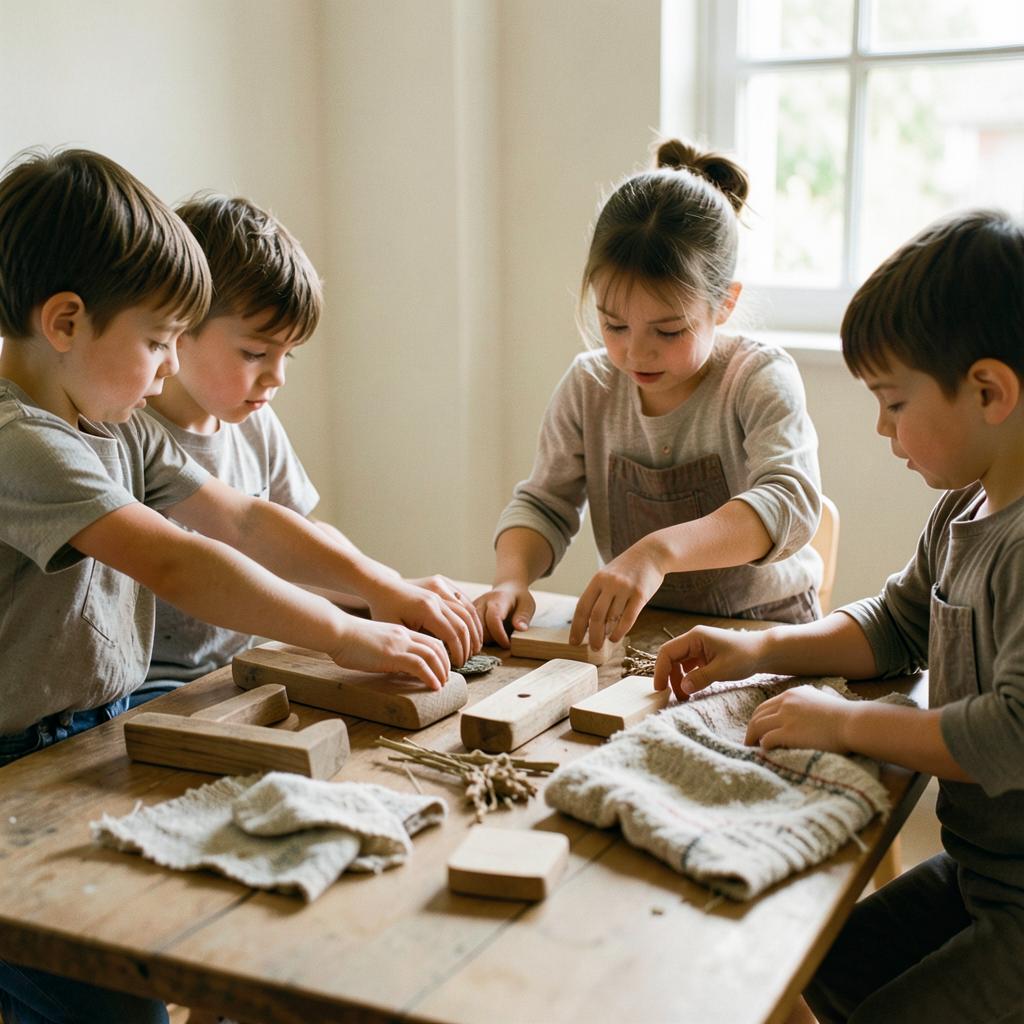
Children use language with people for genuine reasons.
That principle shapes Kinetic Lingo: children encounter language through meaningful movement, cultural context, tangible materials, and responsive human interaction.
The Kinetic Lingo experience
Four elements work together.
- 01
Meaningful Movement
Children use their bodies to experience meaning—not movement simply for entertainment. They might follow a direction, represent an idea, navigate a space, manipulate an object, or respond physically to language.
- 02
Cultural Context
Language appears in human contexts: food, music, stories, places, traditions, everyday routines, contemporary life, and the many communities where the language is used.
- 03
Multiple Ways In
Children can participate through speech, gesture, movement, objects, partners, observation, or combinations of these. Participation doesn’t have to look the same for every learner.
- 04
Responsive Human Interaction
An instructor can notice what a child is communicating, adapt the challenge, model language, expand an attempt, invite a peer into the interaction, or change what happens next.
Psychological safety
Children need room to experiment. Mistakes, approximations, different participation styles, and imperfect pronunciation are treated as part of learning—not something to be embarrassed about.
Our teaching framework
KINETIC is how we design the experience.
Every Kinetic Lingo lesson is developed through seven interconnected lenses.
K — Kinesthetic Meaning
Can children experience what the language means through purposeful action?
I — Inclusive Participation
Are there multiple meaningful ways to enter and participate?
N — Natural Communication
Does the language help children accomplish something, express something, or affect what happens?
E — Experiential Culture
Is culture part of the context rather than decoration?
T — Target-Language Exposure
Are children hearing and encountering meaningful target language throughout the experience?
I — Interaction
Are children communicating with responsive instructors and peers rather than simply receiving information?
C — Connection & Confidence
Does the experience help children feel increasingly comfortable exploring, communicating, and taking linguistic risks?
From experience to communication
A simple rhythm. Many ways to enter.
Step 1
Embody it
Children first encounter meaning through action, objects, gesture, sound, space, or demonstration.
What does this language feel like in the world?Step 2
Live it
The language becomes part of an imaginative or real-world experience—a market, journey, celebration, neighborhood, story, game, meal, or shared challenge.
Now there is a reason for the language to exist.Step 3
Enter it your way
Children participate in ways that work for them: moving, pointing, choosing, matching, speaking, gesturing, observing, working with a partner, or combining approaches.
Participation comes before performance.Step 4
Share it
As children become ready, they use what they are learning to communicate, respond, create, collaborate, or influence what happens next.
Language becomes something they can do with another person.
Multiple ways in
There isn’t one right way to participate.
A child who speaks immediately and a child who watches before joining are not necessarily having the same experience—but both can be participating meaningfully.
Kinetic Lingo is designed for learner variability in communication, attention, movement, sensory processing, regulation, and confidence.
- speaking
- moving
- pointing
- choosing
- gesturing
- manipulating objects
- working with a partner
- observing before joining
We don’t unnecessarily require eye contact, stillness, immediate speech, or public performance as proof that a child is learning.
Kinetic Lingo is an educational language-learning program. Neuroinclusive design does not make the program therapy or a clinical intervention.
Culture as context, not costume
Language belongs to people.
Spanish is a living language, shaped and used by communities with different histories, places, identities, traditions, and contemporary lives.
Kinetic Lingo brings cultural context into learning experiences while avoiding the idea that one food, celebration, costume, or tradition can represent an entire language community.
Our goal is to help children encounter language with curiosity, context, and respect.

Human connection by design
The instructor is part of the methodology.
A Kinetic Lingo instructor isn’t there simply to deliver a script.
They notice.
- A gesture can become a word.
- A word can become a phrase.
- A child’s curiosity can change the next question.
- A peer interaction can become a reason to communicate.
Our instructors are selected for language fluency, ability to work with children, responsiveness, reliability, cultural competence, and their ability to create inclusive learning environments.
That human responsiveness is central to the Kinetic Lingo experience.
Optional ways to extend the experience
Optional tools can extend the experience.
Kinetic Lingo classes are complete learning experiences on their own. No additional materials are required to participate fully.
Families may also choose optional tangible materials designed to extend exploration and create a visible connection to the language-learning journey.
Immersion Kits
Immersion Kits use carefully selected objects and tactile materials to create additional opportunities for children to explore, interact, imagine, and use Spanish in meaningful ways.
They are designed to extend the Kinetic Lingo experience, but they are not required for participation.
Language Passport
The Kinetic Lingo Language Passport is an optional physical companion to the learning experience.
As children explore, communicate, make choices, and connect, the Passport gives them a tangible place to leave traces of the experiences that mattered to them, and to carry those traces forward over time. A trace might be a drawing, a mark, a word, a symbol, a small paper artifact, or something shared with an instructor.
There is no single right way to fill a Passport, and children participate fully in Kinetic Lingo classes without one.
The experience comes first. The Passport helps make the journey visible.
Immersion Kits and Language Passports are highly recommended enhancements, but they are always optional.

The Kinetic Lingo difference
The goal isn’t to memorize a language lesson.
It’s to have something worth saying.
Children learn through experiences that invite them to move, notice, explore, respond, connect, and communicate.
That’s what we mean when we say:
Children learn language by living it.