About Kinetic Lingo
Built around how children experience the world.
Kinetic Lingo began with a simple idea: children shouldn’t have to leave movement, imagination, curiosity, culture, and human connection behind when they learn a language.
Kinetic Lingo creates a different kind of language-learning experience, one where children can move with meaning, explore real and imagined worlds, encounter language in cultural context, participate in different ways, and communicate with people who respond to them.
Children learn language by living it.
Why Kinetic Lingo
Language is more than something to memorize.
Language lives in movement, relationships, stories, places, choices, traditions, humor, routines, and communication.
Kinetic Lingo is built around the idea that children should encounter language within meaningful experiences rather than only as isolated words to remember.
That means creating opportunities for children to move with meaning, encounter language in cultural context, participate in different ways, and communicate with responsive people.
There is no single prescribed way a child must participate.
- Meaningful Movement
- Cultural Context
- Multiple Ways In
- Responsive Human Interaction
- Psychological Safety
What guides us
The experience matters.
Meaning should be experienced
Children should have opportunities to physically experience, respond to, and use linguistic meaning, not simply memorize it.
Culture belongs inside language
Language and culture are deeply connected. Cultural context should help children understand how language lives in people’s experiences and communities.
Culture as Context, Not Costume.
There should be multiple ways in
Children vary in how they communicate, move, attend, process sensory information, regulate, and participate. Learning experiences should allow meaningful participation through speech, gesture, movement, objects, partners, observation, and other appropriate forms of engagement.
Human responsiveness matters
Communication becomes meaningful when another person notices, responds, adapts, expands, and allows what a child communicates to affect what happens next.
Confidence grows through psychological safety
Children should be able to experiment with language without being shamed for mistakes, imperfect pronunciation, different participation styles, or needing time before speaking.
Screen-free, not anti-tech
We protect class time for experiences children can enter.
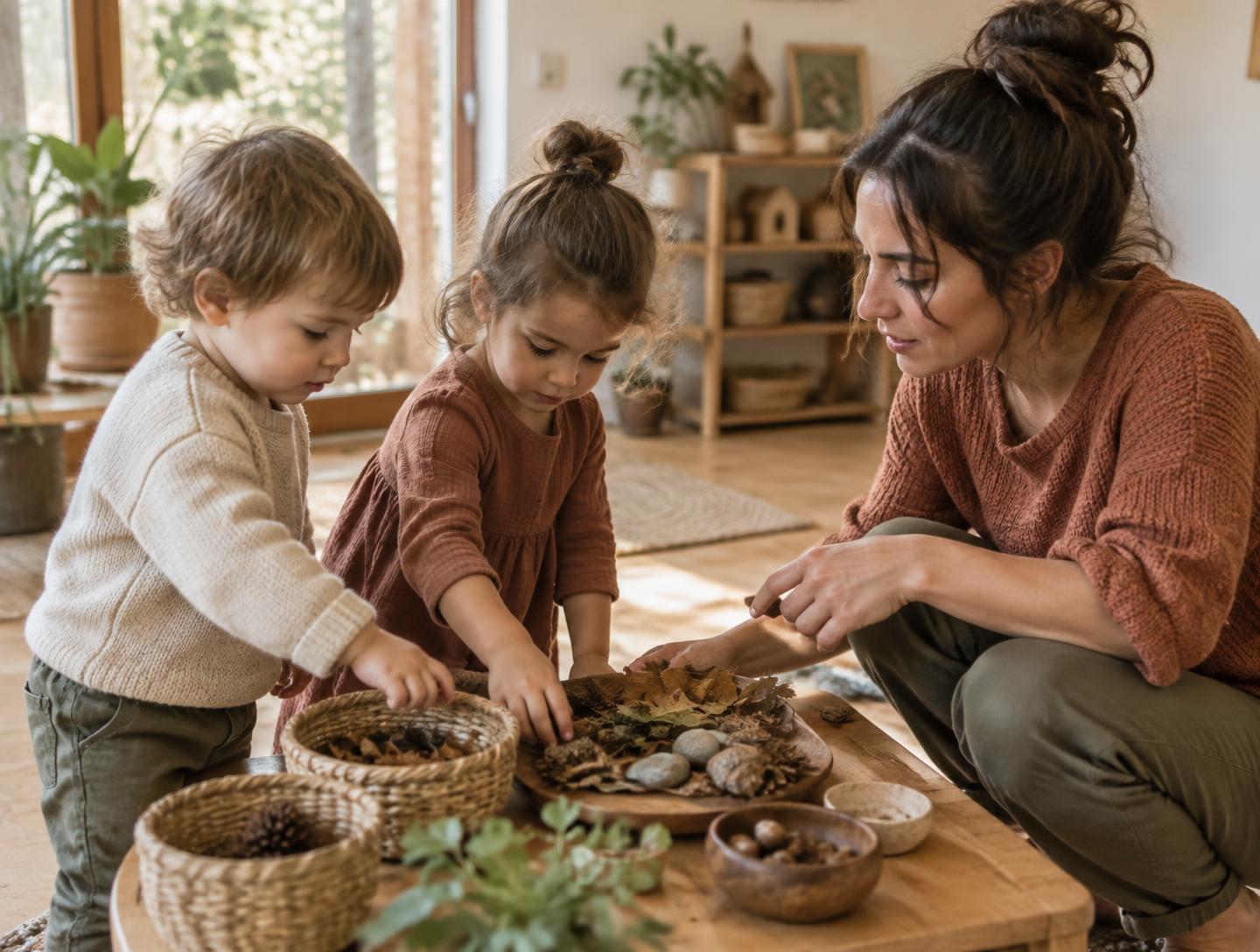
Kinetic Lingo classes are intentionally screen-free.
That choice is not a rejection of technology. It protects class time for movement, tangible exploration, imaginative experiences, face-to-face communication, and responsive interaction with other people.
Technology can be valuable in children’s lives and learning. During Kinetic Lingo classes, we intentionally make room for experiences that happen through bodies, objects, spaces, imagination, and human connection.
Screen-free class time is a design choice not an anti-technology philosophy.
The Kinetic Lingo approach
The experience is the moat.
Kinetic Lingo is not built around a single activity, material, or teaching trick.
The educational experience comes from multiple pieces working together: meaningful movement, cultural context, neuroinclusive participation, experiential learning, responsive instructors, thoughtful curriculum, tangible materials when useful, and an environment where children can experiment with language safely.
As Kinetic Lingo grows, those principles are intended to remain at the center of how experiences are designed and delivered.
The experience is the moat.
Come experience Spanish differently.
Kinetic Lingo currently offers Spanish experiences for individual learners and privately organized groups in the San Francisco Bay Area.